
Artist Statement
I’m drawn to tension, between what is defined and what resists definition, between structure and disruption, between elements that don’t fully align but continue to exist together. A fixed linear framework runs through my work, while the surface, built through conflicting mediums, shifts and pushes back against it. That push and pull is not resolved; it is held.
Within that space, figures, landscapes, and symbols begin to collapse into one another, forming structures where bodies feel like terrain and language appears in fragments—glyphs, nodes, and partial signals that suggest urgency without closing into a single reading.
I’m interested in how difference operates without needing to be reconciled. Contradiction and misalignment are not treated as problems, but as conditions that persist, materially and experientially. The work allows these forces to remain in place, shaping one another without fully settling.
Rather than resolving these tensions, I try to maintain them, holding a space where meaning remains specific, but resists closure. Ambiguity, in this sense, is not confusion, but a complete and stable condition.
Biography
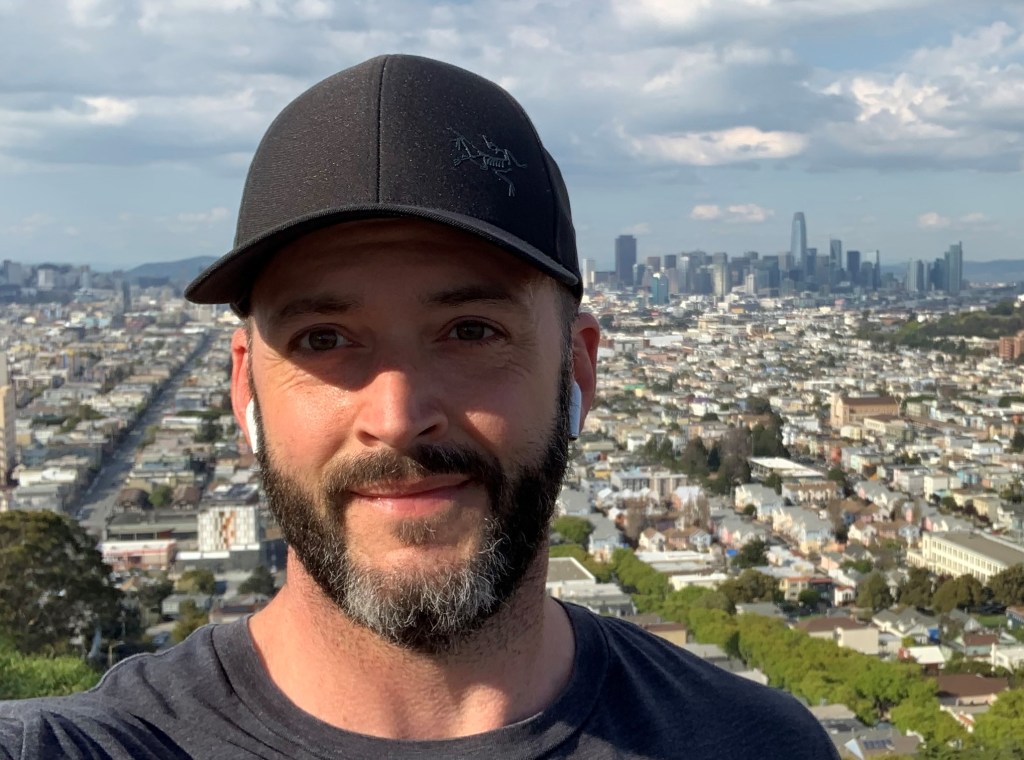
Warren Box is a painter based in the San Francisco Bay Area.
He was raised in Starkville, Mississippi, where an early engagement with the arts existed alongside a community shaped by agriculture and transition. That foundation remains central to his work, where disparate elements are held together without being forced into resolution.
His initial training was in music, studying piano and bassoon, where structure, rhythm, and disciplined systems formed the foundation of his creative thinking.
After moving to the Bay Area to continue his pursuit of music, his interests shifted toward painting, carrying with it that same structural awareness. His art now builds visual systems that operate under tension, where fixed frameworks meet resistant surfaces and elements that don’t fully align are held in place rather than resolved.
Working across mediums that are seemingly in conflict, oil, acrylic, and oil pastel, he sustains them in a fixed relationship, where their friction draws figure, landscape, and symbol into a charged interplay.
Maintaining studios in both San Francisco and the Sierra Foothills, his practice moves between environments that mirror this dynamic—urban and rural, structured and open, reinforcing an ongoing interest in how difference and misalignment function as stable conditions.
Rather than resolving these tensions, his work sustains them—holding ambiguity as something active, specific, and complete.


